


I usually travel in a way that prioritizes depth over convenience. I like staying in places where I’m not insulated from the local environment, where I can see how daily life operates. Because of that, large, all-inclusive resorts were never my thing. They felt disconnected from the places around them.
But recently, while recovering from knee surgery, I ended up on an all-inclusive trip to Mexico that I didn’t choose. My mobility was limited, and exploring wasn’t really an option. What the setup allowed me to do was relax and rest. And for the first time in a long while, I came home from a trip actually feeling rested.
As with most things, I treated the experience as a learning moment. It made me think about Belize’s current predicament: a tourism system built largely for short-stay, island-focused travelers from a single market, and what expanding that range could realistically look like.
When Destinations Optimize Too Narrowly
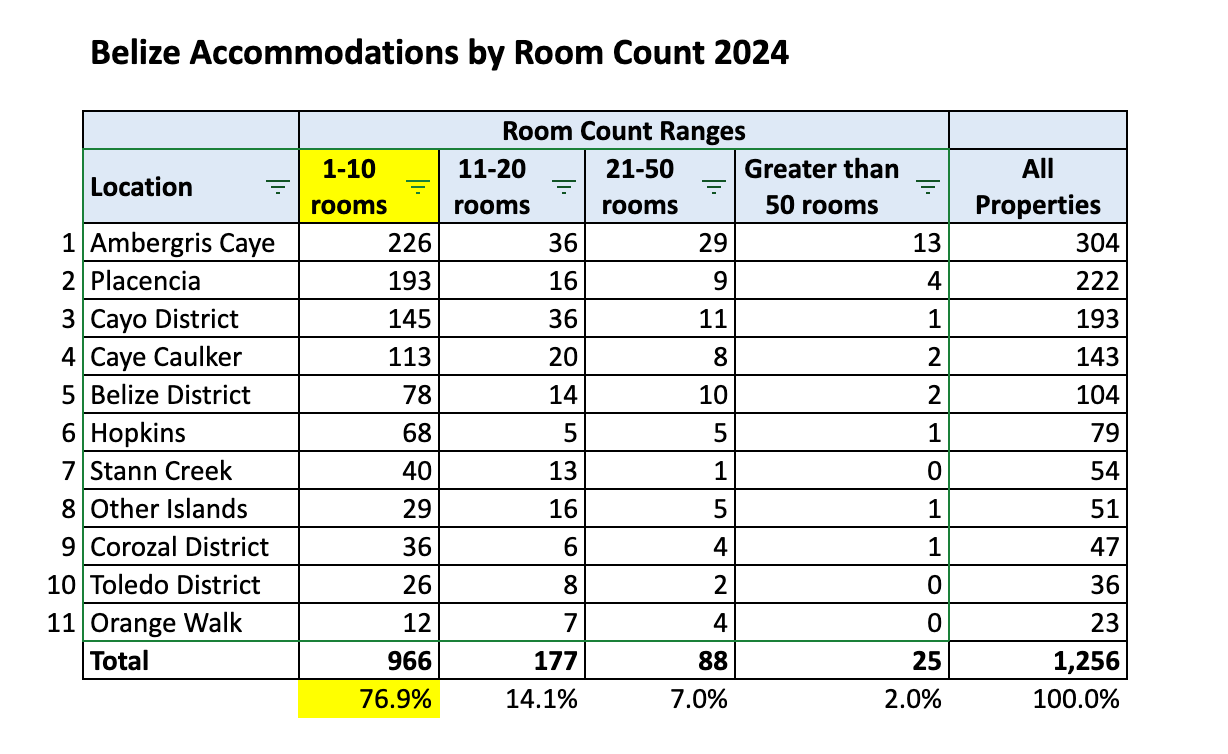
Belize is one of the most distinctive destinations in the region, in large part because of its heavy reliance on small boutique hotels (76.9% of hotels have 1-10 rooms). The experience is personal, small-scale, and closely tied to nature and culture. That is a real strength.
But it also creates constraints.
When a tourism system is built primarily around small properties, it’s less flexible. Over time, boutique-led destinations often struggle to absorb higher volumes, serve multiple market segments at once, or support air routes that require steady and predictable demand.
This is not a critique of boutique hotels. It’s a structural observation: tourism systems with a wider range of options tend to be more resilient.
Optionality as a Design Choice
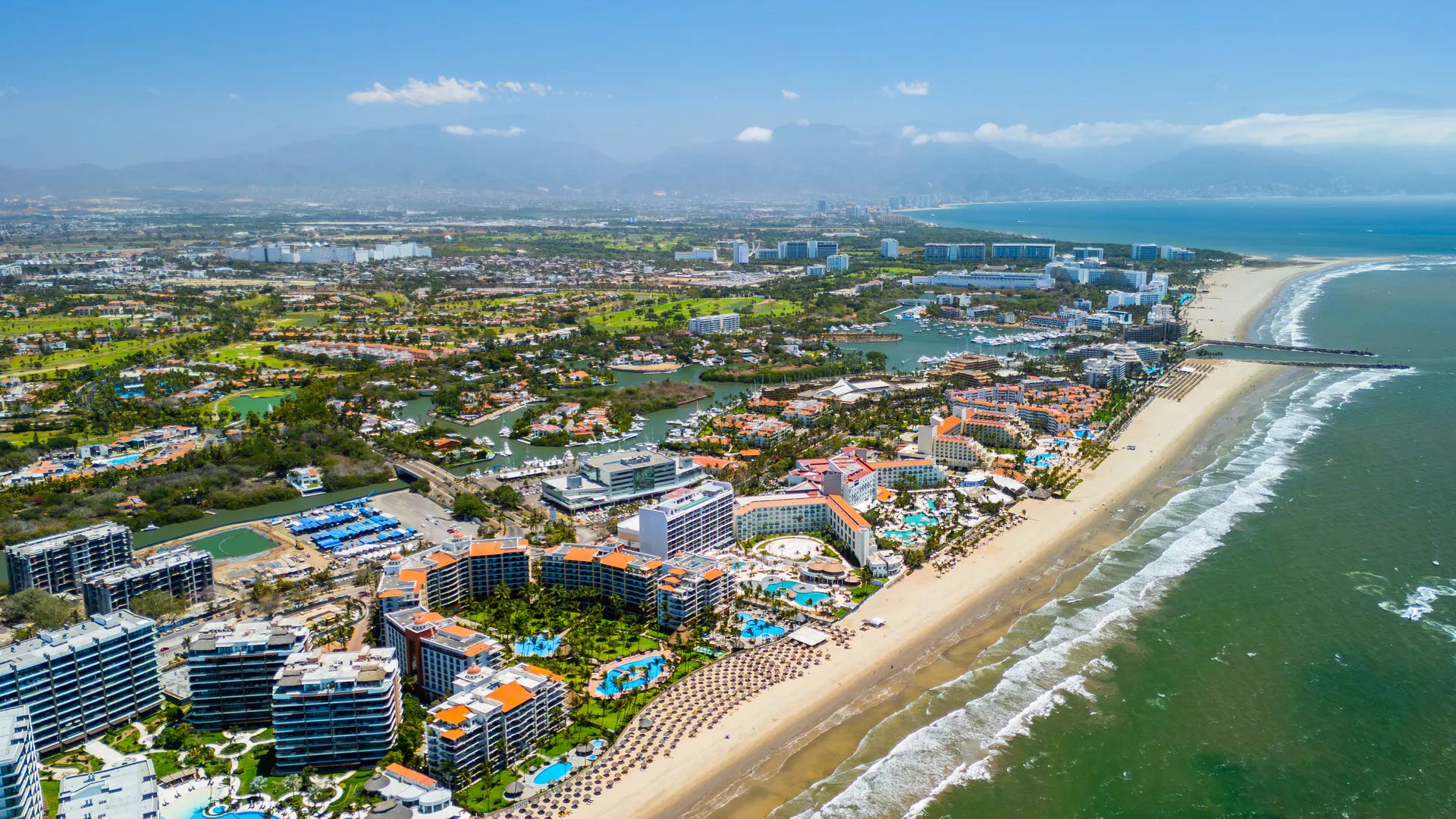
Nuevo Nayarit, the stretch of coast where I stayed in Mexico, offers a useful contrast. It’s a modern, planned resort zone in the Riviera Nayarit, designed as a concentrated area for large-scale tourism rather than a collection of ad hoc developments.
That design choice shapes how the area functions. Nuevo Nayarit is 30 minutes from the international airport and near Puerto Vallarta, one of Mexico’s most established tourism destinations. Within a relatively small region, large all-inclusive hotels serving different markets operate side by side. Family-oriented resorts with several hundred rooms, often geared toward domestic travelers, coexist with luxury and adults-only properties that are smaller by comparison but still clearly large-scale.
That concentration matters because it absorbs pressure. It allows the tourism system to handle volume, support consistent air routes, and serve travelers who prioritize ease and predictability, without forcing every destination to scale up or change its character.
This wasn’t accidental. Nuevo Nayarit, formerly Nuevo Vallarta, emerged in the 1990s from a planning effort in which Mexico’s National Trust Fund for Tourism Development (FONATUR) assembled land, built core infrastructure, and defined a resort corridor before private hotels arrived. The same organization had done this decades earlier in Cancun, but here the logic was applied more selectively, adding capacity next to an already successful city (Puerto Vallarta) rather than creating a destination from scratch.
The Case for Targeted Range and Flexibility in the Hotel Mix
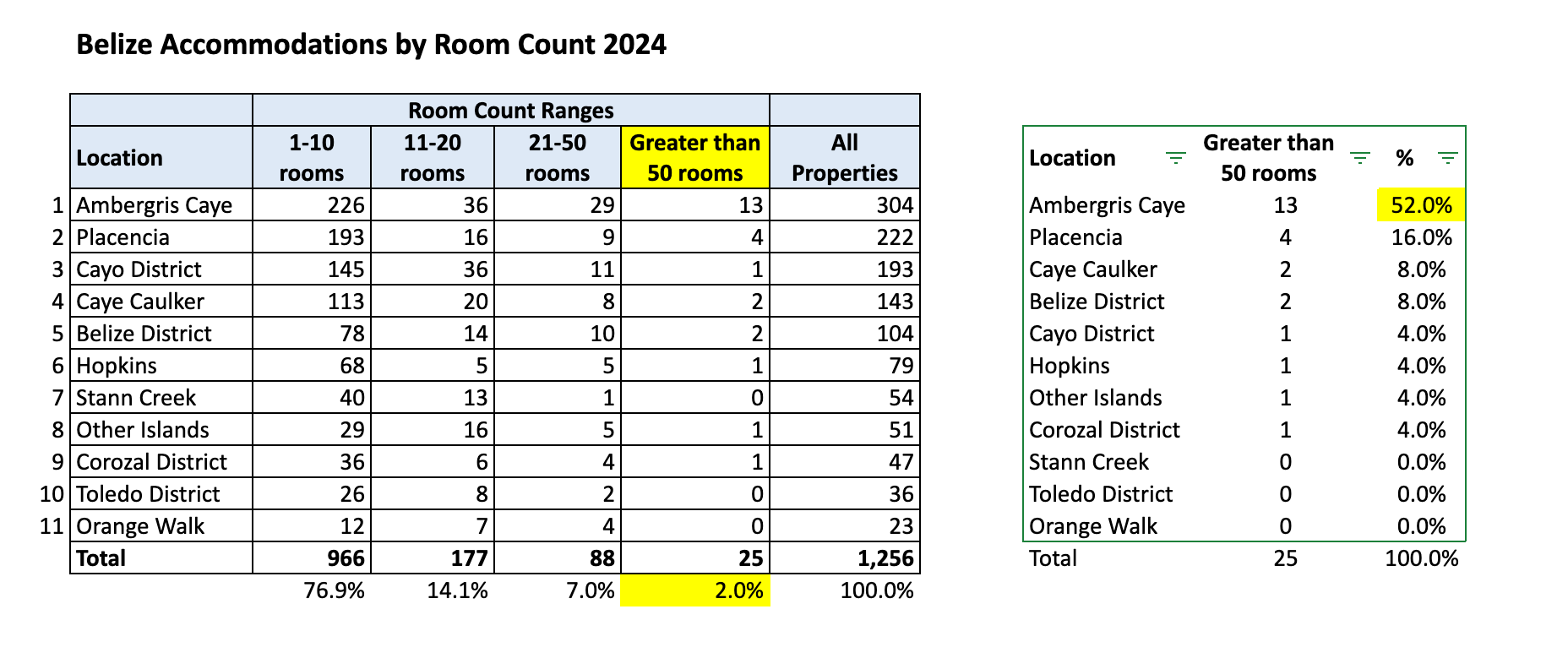
In my previous post, I argued for expanding the “missing middle” in Belize’s accommodation mix, particularly more affordable inland options that support longer stays and encourage people to move beyond the islands. That remains an important gap to address. But it’s only part of the picture.
Belize’s accommodation base is overwhelmingly small, and large-scale hotels are rare. Even more telling, the limited number of larger properties that do exist are concentrated in one place: Ambergris Caye (52%). This concentration quietly shapes travel behaviour and the geographic distribution of tourism income.
Which is why introducing range and flexibility in the hotel mix could be a good strategy. In other words, without changing Belize’s overall character, the country should consider adding a small amount of well-located hotel capacity so the tourism system is less brittle—better able to adjust to shifts in demand, seasonality, and market mix, rather than being optimized for only one type of visitor and one set of conditions.
In practice, that means allowing a limited number of well-defined resort zones, supported by appropriate infrastructure and coordinated planning. This could be done through a dedicated public entity, similar to Mexico’s FONATUR, with a mandate to acquire, assemble, and service land for tourism development, align infrastructure investment, and sequence development intentionally. Within those zones, larger resorts would play a specific role: help attract and sustain direct flights, support predictable demand, and serve travelers who prefer all inclusive experiences. They would also bring marketing capacity and global distribution channels that help convert demand into bookings at scale.
Crucially, this is not about spreading large resorts everywhere or redefining Belize’s identity. It’s about concentrating scale where it makes sense, so the rest of the country isn’t forced to absorb pressures it was never designed for. The goal isn’t to change what makes Belize special. It’s to strengthen the structure underneath it, so the tourism system can adjust when conditions inevitably change.
While your analysis and recommendation make a lot of sense, the real problem lies somewhere else. There is no political leadership which applies strategic thinking beyond the current term. It is just not there. In many realms of life, be it economy, education, energy or finance, problems are obvious and proven solutions can be found all over the world. However, we only do uncoordinated mini steps. I am not very optimistic.
Love that you called out destination management—it pushed me to think beyond “more rooms” and into the full visitor journey.
It also reminded me of how well Destination Belize magazine worked as a discovery tool. We could use that same energy in a more structured way—especially because we don’t have many destination-specific fairs/expos during the tourism season. Outside a few anchors (Taco Fest in OW and Garifuna celebrations down south), there isn’t a lot consistently “on” for visitors in peak months. Easter and Agric events are important, but they’re mostly for locals.
From the tech side, it makes me ask: what booking + discovery infrastructure are visitors used to where they come from (events, tours, transport visibility), and how do we offer something comparable locally? Hotels are one obvious example—many boutique family-run places still operate on phone + paper, and the same is true across tours and transport.
I can see value in expanding the strategy into a few lenses: destination programming, tour/experience booking, and transport/food coordination. The opportunity is in the knowledge—making Belize easier to navigate and plan, not just easier to sleep in.
Really strong write-up.